
Patient diagnoses and personal identification details are essential to protect. Once these records reach the end of their retention periods, healthcare facilities must handle them accordingly. Following medical record shredding compliance requirements protects patient privacy and ensures healthcare organizations meet applicable data destruction standards.
Follow HIPAA Document Destruction Requirements
The Health Insurance Portability and Accountability Act (HIPAA) requires covered healthcare organizations to protect patient information throughout the disposal process. Paper records containing protected health information (PHI) must become unreadable, indecipherable, and incapable of reconstruction.
HIPAA permits shredding, pulverizing, pulping, and burning as appropriate destruction methods. However, facilities must ensure their chosen process adequately destroys sensitive information, including patient names, treatment details, and insurance records.
Verify Medical Record Retention Periods
Before disposing of patient files, healthcare administrators must confirm that applicable retention periods have expired. It’s necessary to follow the state’s laws regarding how long to preserve patient records.
HIPAA doesn’t establish a universal medical record retention period, although it requires organizations to retain various compliance documentation for six years. Additionally, ongoing litigation, investigations, or other legal obligations may prevent facilities from destroying records after their standard retention periods expire.
Secure Patient Records Before Shredding
Documents awaiting destruction require appropriate safeguards to maintain patient confidentiality. Leaving intact medical paperwork in open recycling bins or accessible trash containers exposes sensitive information to unauthorized individuals.
Healthcare facilities should establish designated collection areas and restrict access to personnel responsible for document disposal. Locked collection consoles provide secure temporary storage until employees complete the shredding process.
Establish Shredding Procedures for Staff
Consistent disposal practices depend on employees knowing how to handle confidential paperwork. Healthcare organizations must train relevant staff members on established policies, including procedures for identifying documents eligible for destruction.
Written instructions should identify authorized personnel, approved disposal locations, and procedures for handling documents awaiting shredding. Facilities must address off-site disposal activities, ensuring employees who handle patient records outside the organization follow the same confidentiality requirements.
Choose Appropriate Medical Record Shredding Equipment
HIPAA doesn’t require NSA-approved shredders or specify a universal particle size for destroying paper medical records. However, the resulting fragments must prevent unauthorized individuals from reading or reconstructing confidential information.
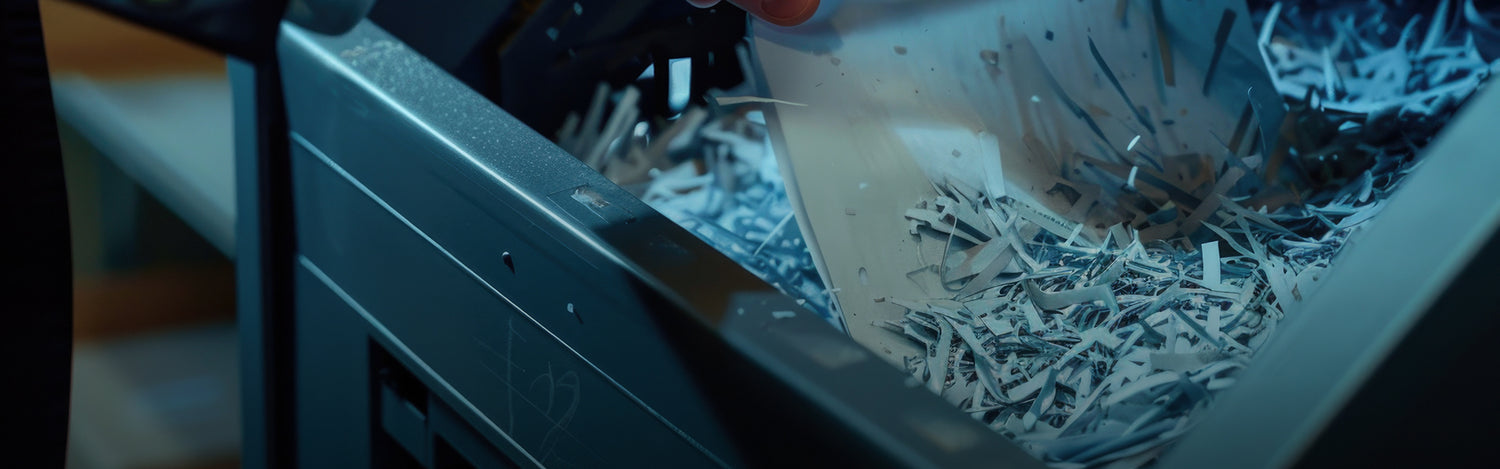
Strip-cut machines produce continuous strips that present greater reconstruction risks. Therefore, crosscut shredders are the more favorable option. They slice each sheet into tiny particles so that the information is irretrievable.
Beyond cut style, equipment selection depends on document volume and operating demands. For hospitals and medical offices processing substantial quantities of paperwork, large shredders with sheet capacities ranging from 10 to 40 will be durable enough to accommodate frequent disposal activities.
Maintain Secure Medical Record Disposal
Establishing consistent medical record shredding compliance practices demands careful equipment selection and procedures. Healthcare administrators should periodically review disposal policies to address operational changes and evolving regulatory obligations.
Capital Shredder Corp. supplies commercial and high-security paper shredders for organizations handling confidential information. Browse our shredding equipment to identify a machine that suits the facility’s document disposal volume.