
Standard sheets of paper with confidential information aren’t the media types offices need to destroy. Magnetic drives, optical discs, tapes, and electronic media hold sensitive data that needs proper disposal, too.
Degaussers and disintegrators are two secure data disposal methods that serve different purposes. Before adding one of these machines to your office, find out which one will best accommodate your workflow.
Degaussers
Magnetic Fields Erase Stored Data
Hard disk drives and magnetic tapes store information through tiny magnetic orientations. The degausser disrupts those orientations by exposing magnetic media to a powerful magnetic field.
Once the pulse finishes, the recorded pattern loses its usable structure. The drive may still exist as an object, but the stored data is no longer readable through normal forensic recovery methods.
Magnetic Media Has Certain Limits
Degaussing works on magnetic media, including hard disk drives and magnetic tapes. The process suits agencies retiring drives from classified systems.
Solid-state drives (SSDs) require a different approach. SSDs store data in flash memory chips instead of magnetic platters. A degausser won’t erase flash storage because no magnetic pattern controls the stored information.
It’s important to note that degaussed hard drives become unusable afterward. The same pulse that destroys data damages servo tracks and firmware areas. This outcome suits secure disposal programs that never plan to reuse the media.
Disintegrators
Cutting Heads Reduce Media
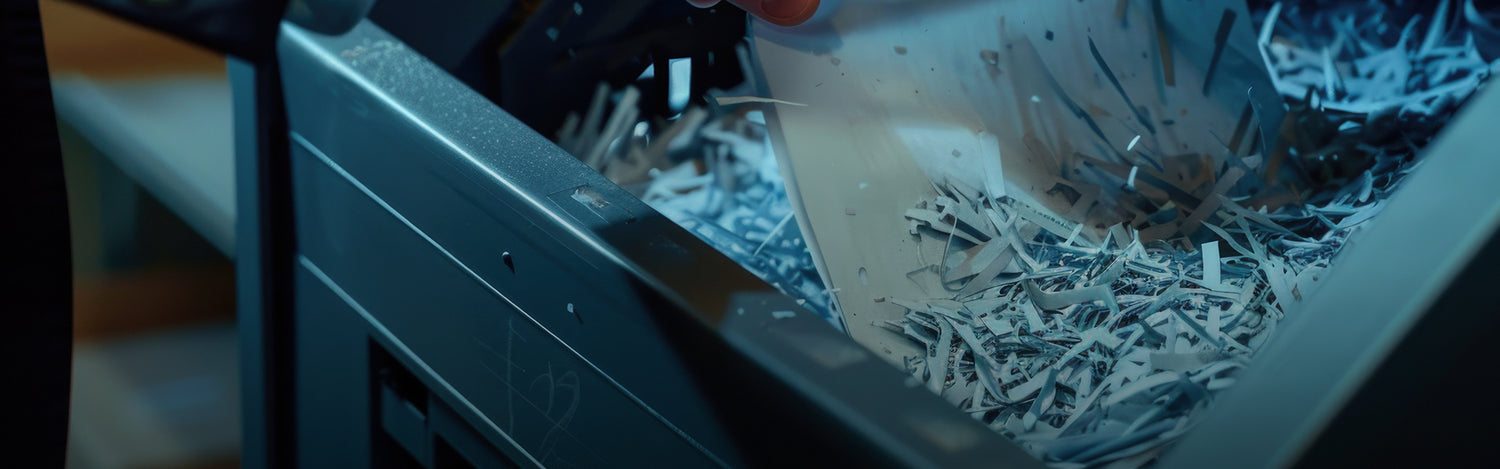
A disintegrator works like a high-security paper destroyer with broad media capabilities. The unit processes paper, optical discs, key tape, ID badges, and some electronic media.
Material enters a hopper or chute and moves into a hardened cutting chamber. Rotating knives shear the media into smaller pieces during multiple cutting passes. Each pass reduces the material further until fragments become small enough to pass through the sizing screen. The machine continues this reduction cycle until every piece meets the required particle specification.
Particle Output Verifies Destruction
Disintegrators produce a visible residue. Teams inspect particle size and collection bags to guarantee that the physical output supports chain-of-custody documentation after destruction.
Output varies by screen size and media type. Paper leaves as small fragments. Discs break into reflective chips. Circuit-based media requires equipment rated for hard materials and electronic components.
Particle reduction suits mixed operations with varied media streams. Facilities that retire paper records and digital media benefit from one controlled destruction area. Teams still have to match each material to the machine rating.
Choose the Proper Method
For secure data disposal, the choice between degaussers and disintegrators comes down to the media format and the security standard your office environment demands. Capital Shredder Corp. supplies secure destruction equipment built around demanding government, military, and private industry requirements. With a variety of high-security disintegrators and degaussers, your team will find the equipment needed to accommodate daily workloads and protect various data forms.