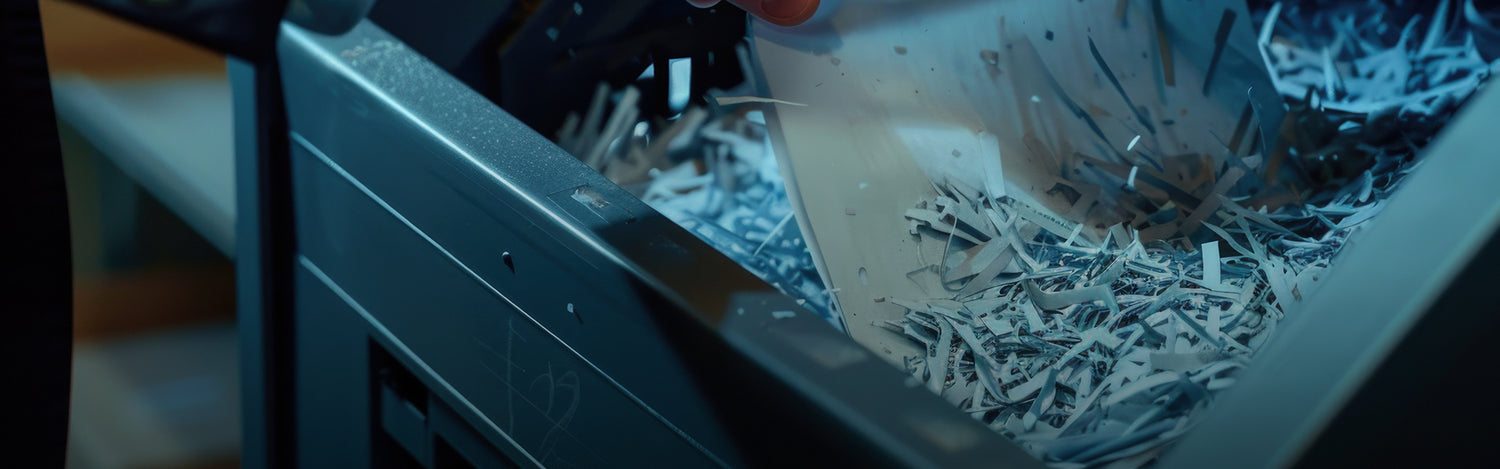

From early equipment built to slice paper stacks to advanced systems engineered to destroy CDs, the evolution of industrial shredding machines is substantial. For business professionals responsible for managing records and safeguarding their security, this history offers a clear picture of how this modern equipment came to be.
Paper Destruction Started It All
The first large shredding machines solved a practical business problem. Offices, government agencies, and records departments needed a fast way to destroy high volumes of paper without relying on small desk units or time-consuming manual disposal. Early machines used straightforward cutter shafts, fixed blade patterns, heavy electric motors, and wide feed openings.
Those early systems focused on throughput rather than precision. Many produced long strips, which met disposal needs at the time. However, strip-cut output left too much information intact for higher-security environments. As document sensitivity rose, manufacturers had to redesign the cutting process instead of simply building bigger frames.
Security Demands Drove Major Changes
Once organizations began treating document destruction as a formal security step, shredder engineering changed fast. Cutter assemblies grew tighter, blade tolerances improved, and feed systems gained better control over how material entered the cutting chamber. The goal shifted from basic disposal to repeatable particle reduction that made reconstruction far less practical.
That change mattered for sectors handling confidential or classified records. From financial firms to healthcare facilities to government offices, professionals needed equipment that could destroy material at scale while meeting strict internal policies. As a result, machine design needed to balance throughput, cut size, durability, and operator safety.
Media Destruction Altered the Market
Over time, businesses stored sensitive information on discs and hard drives. That shift pushed manufacturers to build tougher machines with high torque, reinforced cutting heads, hardened steel components, and strong housings.
This is where industrial shredders began to separate into specialized categories. A machine built for paper records doesn’t perform like one designed to bite through compact discs or crush drive casings. Hard drive destruction, in particular, forced a major leap in engineering because metal enclosures, internal platters, and dense assemblies place far greater stress on cutters than paper ever could.
Automation Refined Performance
Modern shredding systems reflect decades of refinement in both mechanics and workflow. Today’s units may include conveyor-fed loading, automated oiling, and jam detection. These upgrades improve consistency during long production runs and reduce the strain on staff managing large shredding tasks.
That technical progress has made equipment selection far more strategic. Buyers now evaluate motor strength, duty cycle, media compatibility, particle size, and service requirements before choosing a system. A business clearing archived files once a quarter needs a different solution from a facility destroying mixed media every day under strict rules.
The Equipment Businesses Need Now
Each phase of the evolution of industrial shredding machines answered a new business risk. The best modern systems destroy materials quickly and securely.
For organizations that need dependable destruction equipment, Capital Shredder Corp offers high-security industrial shredders. Whether you work for a government facility or in a standard office environment, every business leader benefits from a reliable paper shredder at their disposal.